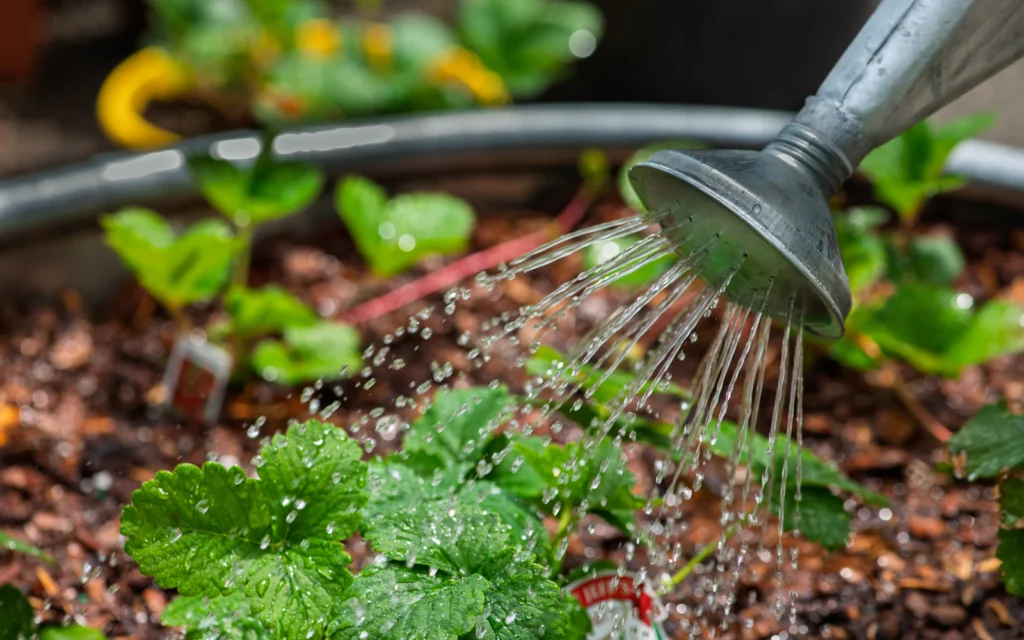
The same amount of water can do very different jobs depending on when you apply it. Water at the wrong time and much of it evaporates, or leaves stay wet all night and invite fungal disease.
The best time: early morning
Between sunrise and about 10 a.m. is ideal for almost everything:
- Air is cool and still, so less water evaporates.
- Plants are well hydrated before the heat of the day.
- Leaves dry quickly in the sun, reducing mildew and blight.
- Water pressure is often better before peak household use.
Is evening watering bad?
Evening is the second-best time and fine for most gardens, especially if you water at the base rather than over the leaves. The risk is foliage staying wet overnight, which favours diseases such as powdery mildew on squash and blight on tomatoes. If you water in the evening, do it early enough for leaves to dry before dark, and use drip or soaker hoses where you can.
What about midday?
The myth that droplets scorch leaves is not true for most plants. Midday watering simply wastes more to evaporation. If plants are wilting badly in a heatwave, water them whenever you notice: a thirsty plant matters more than perfect timing.
Timing by situation
| Situation | Best timing |
|---|---|
| Vegetable beds | Early morning, at the base |
| Lawns | Early morning (4–10 a.m.), so grass dries by evening |
| Pots and hanging baskets in summer | Morning, plus a top-up in the late afternoon on hot days |
| Drip irrigation | Early morning; can also run at night because leaves stay dry |
| Houseplants | Any time; morning lets excess drain before the cooler night |
Automate it
An inexpensive tap timer with drip line or soaker hose waters at dawn every time. Use our irrigation run time calculator to set the minutes for each zone and the drip emitter calculator for run times per plant. For a weekly plan based on rainfall and soil, see the watering schedule calculator.
More guides
How Much Grass Seed Do I Need? Rates per 1,000 Sq Ft and per Acre by Grass Type
Seeding rates differ fivefold between grasses: bluegrass needs 2-3 lb per 1,000 sq ft, tall fescue 8-10 lb. Here are rates by…
Read guide
Growing Degree Days Explained: The Formula, Corn GDUs and How to Use Them
Growing degree days measure heat, not time, so they predict crop stages and pest timing better than the calendar. Here is the…
Read guide
How Much Is a Black Walnut Tree Worth? A Realistic Guide to Selling Walnut Timber
Most black walnut trees are worth hundreds, not thousands. Here is how buyers value walnut logs, why the Doyle rule matters and…
Read guide