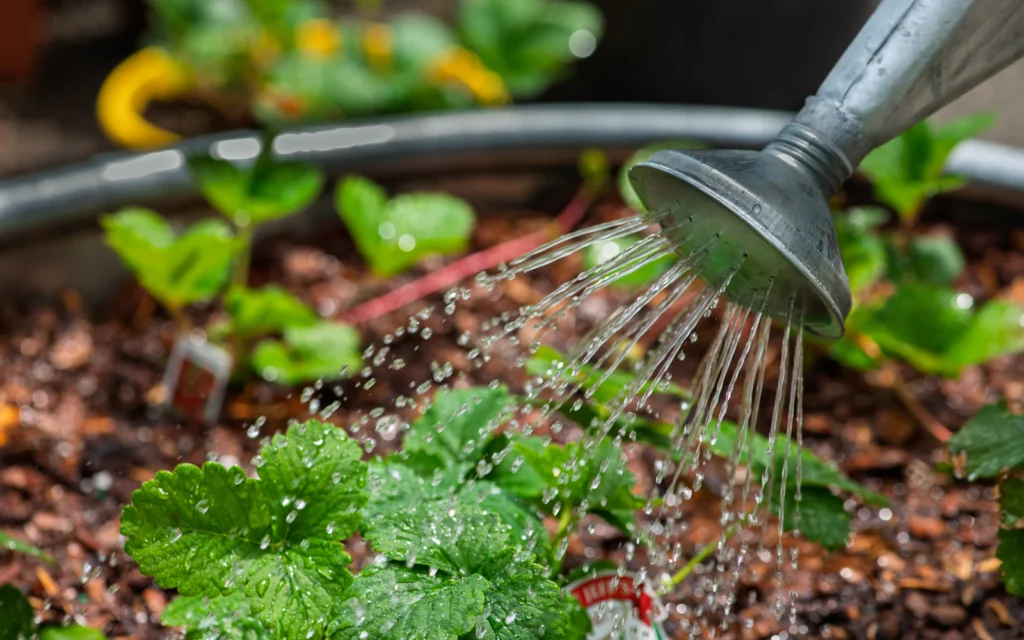
Most gardeners start with a hose or watering can. As the garden grows, watering takes longer every summer and the question comes up: is drip irrigation worth it?
Side-by-side comparison
| Drip irrigation | Hand watering | |
|---|---|---|
| Water efficiency | About 90%: water goes straight to roots | 60–80%: some runs off or evaporates |
| Time each week | Minutes once set up, none with a timer | Can be hours in summer |
| Upfront cost | Typically $50–$200 for a home garden | Almost nothing |
| Disease risk | Low: leaves stay dry | Higher if leaves are wetted |
| Flexibility | Fixed layout | Water anything, anywhere |
| Consistency | Very even | Depends on the person |
When drip wins
- Vegetable rows and raised beds watered several times a week.
- Hot, dry climates or areas with watering restrictions.
- Gardens you need to leave for holidays.
- Crops prone to leaf diseases, such as tomatoes and squash.
When hand watering is fine
- A few pots or a small bed.
- New sowings that need gentle, frequent sprinkles.
- Gardens that change layout every season.
The best of both
Many gardeners put permanent beds on drip and hand-water pots and seedlings. A tap timer on the drip system handles the bulk of the work.
Planning a drip system
- Measure your rows or beds and decide how many drip lines each needs.
- Choose emitter spacing: about 30 cm (12 in) for close-planted crops.
- Check your tap’s flow so you know how many emitters one zone can run.
Our drip irrigation planner counts emitters, tubing and fittings and tells you how many zones you need. Then use the drip emitter calculator to set run times per plant and the drip flow rate calculator to check your tubing can carry the flow.
More guides

How Much Grass Seed Do I Need? Rates per 1,000 Sq Ft and per Acre by Grass Type
Seeding rates differ fivefold between grasses: bluegrass needs 2-3 lb per 1,000 sq ft, tall fescue 8-10 lb. Here are rates by…
Read guide
Growing Degree Days Explained: The Formula, Corn GDUs and How to Use Them
Growing degree days measure heat, not time, so they predict crop stages and pest timing better than the calendar. Here is the…
Read guide
How Much Is a Black Walnut Tree Worth? A Realistic Guide to Selling Walnut Timber
Most black walnut trees are worth hundreds, not thousands. Here is how buyers value walnut logs, why the Doyle rule matters and…
Read guide