A drip emitter calculator turns numbers into a run time you can set. Enter the water each plant needs in a day, the flow of one emitter, and the emitters on each plant. The calculator divides the water by the flow of those emitters, and it gives the emitter count and the total flow for the bed.
The rest of this guide walks through each formula, works a tomato bed example step by step, gives a separate imperial example, and covers emitter size, emitters per plant, and what the calculator does not give.
The Drip Emitter Calculator Formulas in Plain Words
The calculator uses three formulas. Each one answers a different question, and each one uses only numbers you can find in the garden.
The first formula gives the run time. Run time equals water per plant divided by emitters per plant times emitter flow. In words, add up the flow of all the emitters on one plant, then divide the daily water need by that combined flow. The answer comes out in hours, so multiply by 60 for minutes. This is the formula that sets your timer.
The second formula gives the emitter count. Emitters equals plants times emitters per plant. With 20 plants and two emitters on each plant, you need 40 emitters. Count them when you set the bed up, because a missing emitter changes the run time for that plant.
The third formula gives the system flow. System flow equals emitters times emitter flow. This is the total flow of the whole bed while the drip runs.
| Formula | Question it answers | Numbers you need |
|---|---|---|
| Run time | How long to run the drip | Water per plant, emitters per plant, emitter flow |
| Emitters | How many emitters the bed needs | Plants, emitters per plant |
| System flow | How much water the bed draws at once | Emitters, emitter flow |
None of the formulas asks for bed size, tubing length, or zone count. If you need row layout, tubing length or zones, use the Drip Irrigation Planner instead. The Irrigation Run Time Calculator also works with run time, but this calculator starts from water per plant and emitters per plant.
The Worked Example Step by Step
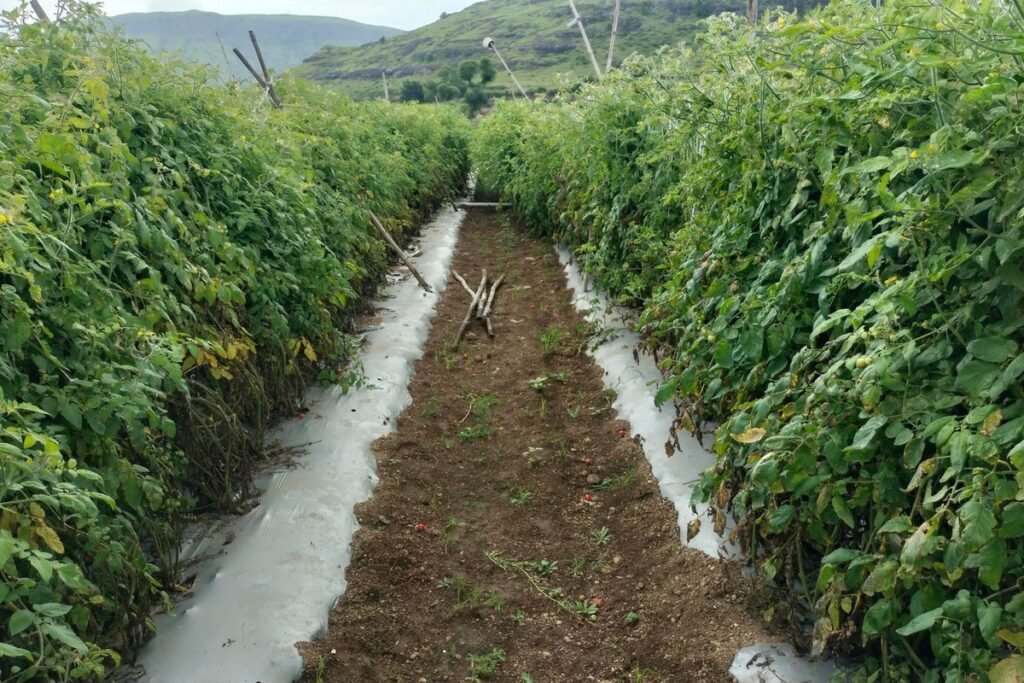
The worked example on the calculator page uses a tomato bed. A tomato plant needs 4 L of water a day in this example. Each plant has two emitters, and each emitter flows at 2 L/h.
Step one is the combined flow on one plant. Two emitters at 2 L/h each give 4 L/h. Note this figure first.
Step two is the run time. Divide the daily water, 4 L, by the combined flow, 4 L/h. The answer is 1 hour, which is 60 minutes.
Step three is the emitter count for the bed. The bed has 20 plants, and each plant gets two emitters, so 20 times 2 gives 40 emitters.
Step four is the system flow. Multiply the 40 emitters by the flow of one emitter, 2 L/h, and the bed draws 80 L/h while it runs. That is the total for the whole bed.
| Number | Value |
|---|---|
| Water per plant | 4 L |
| Emitters per plant | 2 |
| Emitter flow | 2 L/h |
| Combined flow per plant | 4 L/h |
| Run time | 60 minutes |
| Plants in the bed | 20 |
| Emitters in total | 40 |
| System flow | 80 L/h |
Check the run time by working backwards. In 60 minutes, one plant with two emitters at 2 L/h each receives 4 L, which matches the daily need. In one hour the bed draws 80 L, and 20 plants at 4 L each need 80 L in total.
The Imperial Example: A Rounded Equivalent
The imperial example is kept separate from the metric example on purpose. The two sets of figures are rounded equivalents, not exact conversions, so do not mix a number from one set with a number from the other.
In imperial units, a plant needs 1 gallon a day. It has two emitters, and each emitter flows at 1 GPH. First find the combined flow on one plant. Two emitters at 1 GPH each give 2 GPH. Then divide the daily water, 1 gallon, by the combined flow, 2 GPH. The answer is 0.5 hour, which is 30 minutes.
So the imperial result is 30 minutes for a plant that needs 1 gallon a day from two 1 GPH emitters. The metric example gives 60 minutes for a different daily need, so the run times differ. Work in one system only, from the first entry to the timer setting.
How to Use the Calculator in Steps
The calculator page sets out five steps.
First, pick a plant or enter its daily water need. The page gives a daily need for tomato. For other plants, bring your own daily water figure.
Second, enter the number of plants. Count the plants that run together on one timer setting.
Third, enter the emitter flow. The flow is printed on the emitter, usually in L/h or GPH. Emitters are rated in litres or US gallons per hour at design pressure, so use the printed figure.
Fourth, choose emitters per plant. Vegetables usually get one or two emitters each, shrubs get two to four, and trees get more. Spread the emitters around the root zone so the water reaches the roots evenly.
Fifth, set your timer to the run time, and adjust in heat waves. Plant needs vary with size, weather and soil, so adjust the timer in heat waves. The Garden Watering Schedule Calculator and the Irrigation Scheduling Calculator cover scheduling, a different question from run time.
Which Emitter Size to Choose
Emitter size is the flow of one emitter, and the calculator page gives two sizes as guidance. A 2 L/h emitter, which is 0.5 GPH, suits most vegetables. A 4 L/h emitter, which is 1 GPH, suits larger plants and clay soil.
Start with 2 L/h emitters for vegetables of ordinary size, as the worked example does for tomato. If the plant is larger, or the soil is clay, the 4 L/h emitter is the size the page points to. Two 4 L/h emitters give a combined flow of 8 L/h, twice that of two 2 L/h emitters, so the same need takes half the run time. Enter the flow of the emitter you actually have.
| Emitter size | Suits |
|---|---|
| 2 L/h, 0.5 GPH | Most vegetables |
| 4 L/h, 1 GPH | Larger plants and clay soil |
How Many Emitters Per Plant
The number of emitters per plant changes both the run time and the resilience of the bed. The calculator page gives clear guidance by plant type. Vegetables get one or two emitters per plant. Shrubs get two to four emitters per plant. Trees get more than shrubs, with the exact number left to the grower.
Spread the emitters around the root zone. More than one emitter also spreads water where the roots can reach it.
Two emitters per plant also gives a backup if one clogs. Emitters clog, and a plant with a single clogged emitter gets no water until the clog is found. A plant with two emitters still gets water from the second one while you fix the first. Check emitters regularly for clogging.
Adding emitters doubles the combined flow, so the run time halves. Rerun the formula and reset the timer.
What the Calculator Does Not Give
A calculator is only useful if you know its edges. The drip emitter calculator gives run time, emitter count and system flow, and it stops there.
It gives no cost or prices for any part, and no pump sizing figures.
It gives no emitter spacing, row layout, tubing length or header figures. Those belong to the Drip Irrigation Planner, which is the tool for laying out a bed. It gives no zone count either; zones belong to the planner as well.
It gives no per plant daily water need for any crop except tomato. Tomato is the one exception, at around 2 to 4 L per day in summer once established.
It gives no watering frequency and no days between runs. It answers how long one run lasts, not how many days pass between runs. It gives no soil infiltration figures and no pressure figures beyond the design pressure rating. It also gives no run time split by soil type beyond one note: run drip in one session on sandy soil only if water does not drain past the roots, and split it otherwise.
Common Mistakes
The most common mistake is entering one emitter flow as the flow for the whole plant. With two emitters, the combined flow doubles and the run time halves. Always multiply emitters per plant by emitter flow first.
A second mistake is using one emitter per plant and never checking it. One clog means one plant gets nothing, while two emitters give a backup and regular checks catch clogs early.
A third mistake is mixing metric and imperial figures. Litres with GPH gives a run time that looks precise and is wrong. Pick one system and treat the imperial example as a rounded equivalent of its own.
A fourth mistake is setting the timer once and leaving it for the season. Plant needs vary with size, weather and soil, so adjust the run time in heat waves and as plants grow.
A fifth mistake is running one long session on sandy soil without checking where the water goes. Run in one session only if water does not drain past the roots, and split the run if it does.
A sixth mistake is forgetting the system flow when the bed grows. More plants mean more emitters, so the total flow climbs even though the run time per plant stays the same.
Q: How long should I run drip irrigation for vegetables in summer?
A: Often 30 to 60 minutes, long enough to deliver each plant’s daily need. Use the calculator with your daily need, emitter flow and emitters per plant for the exact run time.
Q: How many emitters per plant should I use?
A: One or two for vegetables, two to four for shrubs, and more for trees. Spread them around the root zone, and two per plant gives a backup if one clogs.
Q: What size drip emitter should I use?
A: A 2 L/h emitter, 0.5 GPH, suits most vegetables. A 4 L/h emitter, 1 GPH, suits larger plants and clay soil. Enter the flow of the emitter you have.
Q: How much water does a tomato plant need per day?
A: Around 2 to 4 L, or 0.5 to 1 gallon, per day in summer once established, depending on heat and plant size. The worked example uses 4 L a day.
Q: What if one emitter clogs?
A: Check emitters regularly for clogging. With two emitters, the second keeps delivering water while you clear the first.
Q: Does the calculator tell me how often to water?
A: No. It gives the run time for one day of water, the emitter count and the system flow, but no watering frequency.
More guides
Hargreaves vs Penman Monteith: When the Simple Estimate Is Enough
Hargreaves vs penman monteith is a choice between a simple estimate from temperature alone and a fuller calculation from complete weather data.…
Read guide
Daily ET0 vs Monthly Average ET0: Planning vs Scheduling
Daily ET0 vs monthly ET0 is a choice between one day and a month. Use a monthly average to plan a season,…
Read guide
How Latitude and Date Change Your ET0
Latitude and ET0 are linked through Ra, the extraterrestrial radiation that reaches the top of the atmosphere. When latitude or date changes,…
Read guide