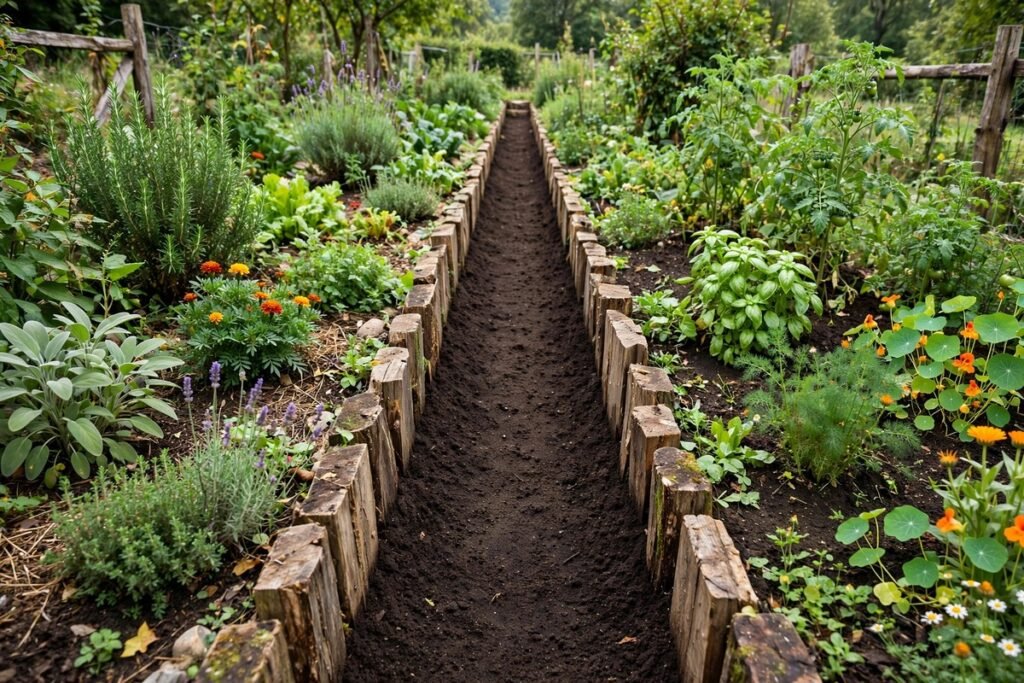
How much soil for a path base? A path 10 m long by 1 m wide at 10 cm deep needs 1 cubic metre before settling, or 1.1 cubic metres with 10 percent extra. That is about 1.42 tonnes, and it needs 28 bags of 40 litres. Measure length, width and depth, then check the result with the Soil Calculator.
Measure your path first
A path is a long narrow area, so measure it as a rectangle. Measure length along the centre, width across the path, and depth from the base to the fill line you plan to use. Write the three numbers down before you start any sum. If the path changes width, split it into sections, work out each section separately, then add the volumes together.
Use one unit for all three measurements. A 10 cm depth is 0.1 m and a 15 cm depth is 0.15 m. Mixing metres and centimetres in one sum is the most common source of a wrong answer, so convert depth first.
The formula for a path area
Volume equals length x width x depth x (1 + extra). Length times width gives area. Area times depth gives plain volume. Plain volume times one plus the extra gives the volume to order, with room for settling.
Add 10 to 20 percent for settling. This blog uses 10 percent, so the extra factor is 1.10.
Weight equals volume x bulk density. Damp material is heavier than dry material. Densities vary with moisture, so treat any weight result as an estimate. The examples here use 1.29 tonnes per cubic metre, the density implied by the site worked example for topsoil.
Bags equal volume divided by bag size, rounded up. Loads equal volume divided by truck size, rounded up. The page does not state the truck size behind its example of one truck load, so this blog does not invent one.
Use the Soil Calculator for your own path
Use the Soil Calculator for your own path. Enter length, width, and depth, and it gives volume, weight, bags, and loads. The worked examples below show the same arithmetic by hand, so you can check the calculator result before you order. If you also need a volume for a garden bed, use the Garden Volume Calculator. If you need a topsoil volume, use the Topsoil Calculator. If you need compost volume, use the Compost Calculator.
Volume table for a path
The table shows plain volume and volume with 10 percent extra for common path sizes, in cubic metres.
| Path length | Path width | Depth | Plain volume | Volume with 10 percent extra |
|---|---|---|---|---|
| 5 m | 1 m | 10 cm | 0.5 cubic metres | 0.55 cubic metres |
| 5 m | 1.2 m | 15 cm | 0.9 cubic metres | 0.99 cubic metres |
| 10 m | 1 m | 10 cm | 1 cubic metre | 1.1 cubic metres |
| 10 m | 1 m | 15 cm | 1.5 cubic metres | 1.65 cubic metres |
| 10 m | 1.2 m | 10 cm | 1.2 cubic metres | 1.32 cubic metres |
| 20 m | 1 m | 10 cm | 2 cubic metres | 2.2 cubic metres |
Length matters as much as depth. A path 20 m long at 10 cm deep needs 2 cubic metres, while a path 10 m long at 15 cm deep needs only 1.5 cubic metres.
Worked example 1: a path 10 m long by 1 m wide, 10 cm deep
Length is 10 m, width is 1 m, and depth is 10 cm, which is 0.1 m. Area is 10 x 1, which is 10 square metres. Plain volume is 10 x 0.1, which is 1 cubic metre. With 10 percent extra, volume is 1 x 1.10, which is 1.1 cubic metres. To get litres, multiply 1.1 by 1000, which is 1100 litres. Weight is 1.1 x 1.29, which is 1.42 tonnes. For bags, 1100 divided by 40 is 27.5, so buy 28 bags of 40 litres.
Worked example 2: a path 5 m long by 1.2 m wide, 15 cm deep
Length is 5 m, width is 1.2 m, and depth is 15 cm, which is 0.15 m. Area is 5 x 1.2, which is 6 square metres. Plain volume is 6 x 0.15, which is 0.9 cubic metres. With 10 percent extra, volume is 0.9 x 1.10, which is 0.99 cubic metres. To get litres, multiply 0.99 by 1000, which is 990 litres. Weight is 0.99 x 1.29, which is 1.28 tonnes. For bags, 990 divided by 40 is 24.75, so buy 25 bags of 40 litres.
Worked example 3: a path 20 ft long by 3 ft wide, 4 in deep
Length is 20 ft, width is 3 ft, and depth is 4 inches, which is one third of a foot. Area is 20 x 3, which is 60 square feet. Volume is 60 x one third, which is 20 cubic feet. To get cubic yards, divide 20 by 27, which is 0.74 cubic yards. To get litres, multiply 20 by 28.3, which is 566 litres. For bags, 566 divided by 40 is 14.15, so buy 15 bags of 40 litres. In cubic feet, one cubic yard holds about 27 bags of 1 cubic foot, or 14 bags of 2 cubic feet rounded up.
The site worked example and settling
The Soil Calculator page gives a worked example for a 5 by 3 m area at 15 cm deep. Area is 5 x 3, which is 15 square metres. Plain volume is 15 x 0.15, which is 2.25 cubic metres. With 10 percent extra, volume is 2.25 x 1.10, which is 2.475 cubic metres, shown as 2.48 cubic metres. That volume weighs about 3.2 tonnes, and it needs 62 bags of 40 litres, because 2480 divided by 40 is 62. The page also says one truck load, as given, without stating a truck size.
Without extra, that area needs 2.25 cubic metres. With 10 percent extra, it needs 2.48 cubic metres, a difference of 0.23 cubic metres, or about 6 bags of 40 litres.
One cubic yard of soil weighs roughly 1900 to 2700 lb, or 0.9 to 1.2 US tons, by soil type and moisture.
Bags or bulk
Bags and bulk start from the same volume, so work out volume first. Bulk soil is sold by the cubic yard or cubic metre, and bags are sold by cubic feet or litres. Bulk is usually cheaper over about 1 cubic metre, or 1.3 cubic yards. That is a volume rule, not a price promise.
A 10 m by 1 m path at 10 cm deep needs 1.1 cubic metres with 10 percent extra, so it sits just over that bulk threshold. A 5 m by 1.2 m path at 15 cm deep needs 0.99 cubic metres, so it sits just under it. Check delivery minimums before you decide.
Check vehicle and trailer weight limits before collecting soil yourself.
A note on material choice
The Soil Calculator gives the fill volume and weight for the area and depth you enter. It does not choose the material. Whether soil or aggregate suits a path base is a material choice to check with the supplier. Do not treat this blog as a claim that soil is the correct structural base material for a path.
Common mistakes
- Measuring the outside of the path edging. Measure the fill area itself.
- Mixing units in one sum. Convert depth to metres first.
- Using the full depth when you plan a lower fill line. Measure to the fill line.
- Forgetting the extra for settling. Add 10 percent before dividing by bag size.
- Rounding bags down. A result of 27.5 bags means 28 bags.
- Using 13.5 bags as a buyable count. Use 14 bags of 2 cubic feet.
- Treating a weight estimate as exact. Densities vary with moisture.
- Counting fill already in the path as fill still to buy. Measure only the depth still to add.
Use the calculator for your own path
Put your own measurements into the Soil Calculator and check the result against the method in this guide. Enter length, width, and depth to the fill line, in one unit, and add 10 to 20 percent for settling. The calculator gives volume and bags. For further reading, use the Guides hub, and if you also need a volume for a garden bed, use the Garden Volume Calculator.
Frequently asked questions
Q: How much soil do I need for a path 10 m long by 1 m wide at 10 cm deep?
A: You need 1 cubic metre before settling, or 1.1 cubic metres with 10 percent extra. That is about 1.42 tonnes and 28 bags of 40 litres.
Q: How do I work out soil volume for a path base?
A: Multiply length by width by depth, then multiply by 1.10 for 10 percent extra. A 5 m by 1.2 m path at 15 cm deep is 0.9 cubic metres, or 0.99 cubic metres with 10 percent extra.
Q: How many bags of soil do I need for a path?
A: Divide litres by bag size and round up. 1100 litres needs 28 bags of 40 litres, and 990 litres needs 25 bags.
Q: How heavy is the soil for a path base?
A: Multiply cubic metres by bulk density. At 1.29 tonnes per cubic metre, 1.1 cubic metres weighs 1.42 tonnes and 0.99 cubic metres weighs 1.28 tonnes.
Q: Does the Soil Calculator choose the material for a path base?
A: No. It gives fill volume and weight for the area and depth you enter. It does not choose the material. Whether soil or aggregate suits a path base is a choice to check with the supplier.
Q: How do I convert cubic feet to cubic yards for soil?
A: Divide cubic feet by 27. 20 cubic feet is 0.74 cubic yards, and a 10 by 10 garden at 6 inches deep is about 50 cubic feet, or 1.85 cubic yards.
Measure the fill area, multiply length by width by depth, add 10 to 20 percent for settling, and divide by bag size and round up. Put those numbers into the Soil Calculator, check the weight, and fill to the line you measured.
More guides

Head to Head Coverage Explained: Spacing, Corners, Edges and Middle
Head to head coverage means each sprinkler head sprays far enough to reach the head next to it, so the distance between…
Read guide
How Many Sprinkler Heads Do I Need
How many sprinkler heads do I need depends on lawn size and throw radius. A 10 by 6 metre lawn with 4…
Read guide
Sprinkler Calculator: A Worked Guide
A sprinkler calculator gives a head count and a zone count from lawn size and spray distance. For a 10 by 6…
Read guide