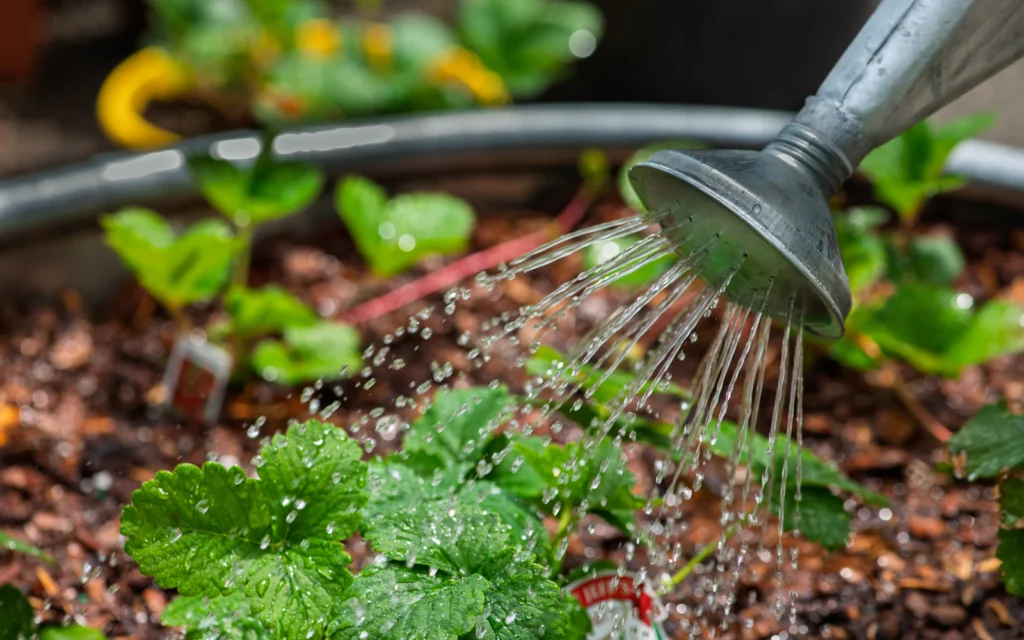
“Water regularly” is the most common and least useful plant advice. Plants do not need a schedule; they need enough water to replace what they lose to the air, and that changes with plant size, weather and soil.
The rule of thumb: 1 inch (25 mm) a week
Most vegetable gardens and lawns need about 25 mm (1 in) of water a week in the growing season, from rain and watering combined. Over one square metre that is 25 litres; over 100 square feet it is about 62 gallons. In hot, dry, windy weather the figure can double.
Typical needs by plant
| Plant | Typical summer water |
|---|---|
| Established lawn | 25 mm (1 in) a week |
| Vegetable beds | 25–38 mm (1–1.5 in) a week |
| Tomato plant in fruit | 2–4 L (0.5–1 gal) a day |
| Large patio pot | Daily in heat, every 2–3 days otherwise |
| Newly planted shrub | 10–20 L (3–5 gal) twice a week for the first summer |
| Young tree | 40–60 L (10–15 gal) a week in dry spells |
Why it changes through the season
Water use follows evapotranspiration: how fast the sun, heat, wind and dry air pull water from soil and leaves. A full-canopy tomato in July uses several times more than the same plant in May. Agronomists multiply a reference figure (ET₀) by a crop coefficient; our crop water requirement calculator does this for common vegetables.
How to measure what you apply
- Sprinklers: set out straight-sided cups or tins, run for 15 minutes, measure the depth and multiply by four for the hourly rate.
- Hoses: time how long it takes to fill a bucket to find the flow, then use our watering schedule calculator to convert the weekly need into minutes.
- Rain: a simple rain gauge tells you how much nature has already provided.
Deep and infrequent beats little and often
Watering deeply two or three times a week sends roots down where the soil stays moist. Daily sprinkles keep roots shallow and most of the water evaporates. Sandy soils need smaller, more frequent waterings; clay soils hold more and need watering less often. The irrigation scheduling calculator works out the ideal interval from your soil and root depth.
Ways to need less water
- Mulch 5–8 cm (2–3 in) deep to cut evaporation.
- Add compost: every 1% more organic matter helps soil hold more water.
- Water at the base early in the morning.
- Collect rainwater: the rain barrel calculator shows how much a roof can catch in one storm.
More guides

How Much Grass Seed Do I Need? Rates per 1,000 Sq Ft and per Acre by Grass Type
Seeding rates differ fivefold between grasses: bluegrass needs 2-3 lb per 1,000 sq ft, tall fescue 8-10 lb. Here are rates by…
Read guide
Growing Degree Days Explained: The Formula, Corn GDUs and How to Use Them
Growing degree days measure heat, not time, so they predict crop stages and pest timing better than the calendar. Here is the…
Read guide
How Much Is a Black Walnut Tree Worth? A Realistic Guide to Selling Walnut Timber
Most black walnut trees are worth hundreds, not thousands. Here is how buyers value walnut logs, why the Doyle rule matters and…
Read guide