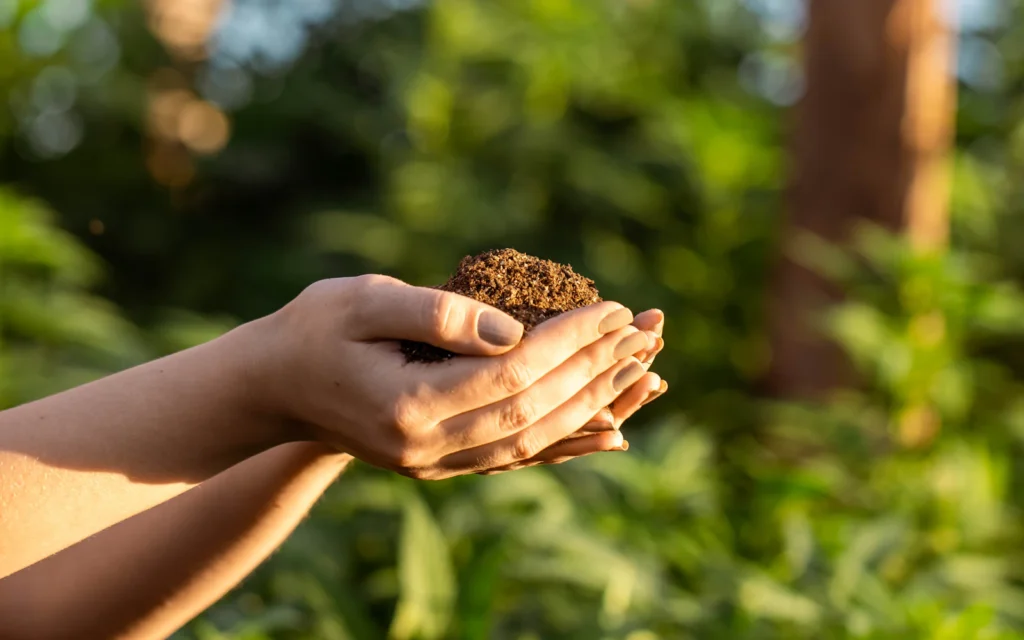
Sandy soil has real advantages: it is easy to dig, drains instantly after rain and warms up quickly in spring, so you can sow earlier. Its weakness is the flip side: water and nutrients drain through before roots can use them.
How to recognise sandy soil
It feels gritty and will not hold a shape when squeezed moist. Water disappears almost immediately, and plants wilt quickly in dry weather. A jar test with our soil texture calculator confirms it; sand and loamy sand have very little clay.
1. Add organic matter, every year
Compost, well-rotted manure and leaf mould act like a sponge, holding several times their weight in water and binding nutrients. Dig a 5–8 cm (2–3 in) layer into new beds, then mulch with compost every year. Organic matter breaks down quickly in warm, airy sandy soil, so regular additions matter more than on clay. The soil amendment calculator converts your target into a layer and bags.
2. Mulch to cut evaporation
A 5–8 cm (2–3 in) mulch of bark, straw or compost keeps the surface cool and moist and slowly feeds the soil. See how much you need with the mulch calculator.
3. Grow cover crops
Sow clover, vetch, buckwheat or rye on empty beds. Their roots hold the soil, and when dug in or cut and left on the surface they add organic matter.
4. Feed little and often
Large doses of quick-release fertiliser wash through sandy soil. Use slow-release organic fertilisers, or split feeds into smaller, more frequent doses.
5. Water smarter
Sandy soil holds little water, so give smaller amounts more often: three sessions a week rather than one. Drip irrigation and soaker hoses suit it well. Our watering schedule calculator plans sessions by soil type.
What about adding clay?
Clay-based amendments such as bentonite can help in very sandy soils but must be mixed thoroughly and in quantity; organic matter is simpler and more reliable for most gardens.
Plants that thrive in sandy soil
Carrots, parsnips, radishes, potatoes, asparagus, lavender, rosemary, thyme, cistus, sea holly and many ornamental grasses love the drainage. With organic matter added, almost any crop will grow well.
More guides

How Much Grass Seed Do I Need? Rates per 1,000 Sq Ft and per Acre by Grass Type
Seeding rates differ fivefold between grasses: bluegrass needs 2-3 lb per 1,000 sq ft, tall fescue 8-10 lb. Here are rates by…
Read guide
Growing Degree Days Explained: The Formula, Corn GDUs and How to Use Them
Growing degree days measure heat, not time, so they predict crop stages and pest timing better than the calendar. Here is the…
Read guide
How Much Is a Black Walnut Tree Worth? A Realistic Guide to Selling Walnut Timber
Most black walnut trees are worth hundreds, not thousands. Here is how buyers value walnut logs, why the Doyle rule matters and…
Read guide